Champion research in the fields of biodiversity and conservation explores new possibilities for a more sustainable planet
With their bioactive, antioxidant, and anti-inflammatory activities, the phenolic compounds from açaí seeds may be the key to extending the shelf life of fruits before they mold and to creating cosmetics with natural origins. Cataloging different marine-origin viruses helps to understand a part of the planet's ecosystems that is still full of mysteries and how it is changing.
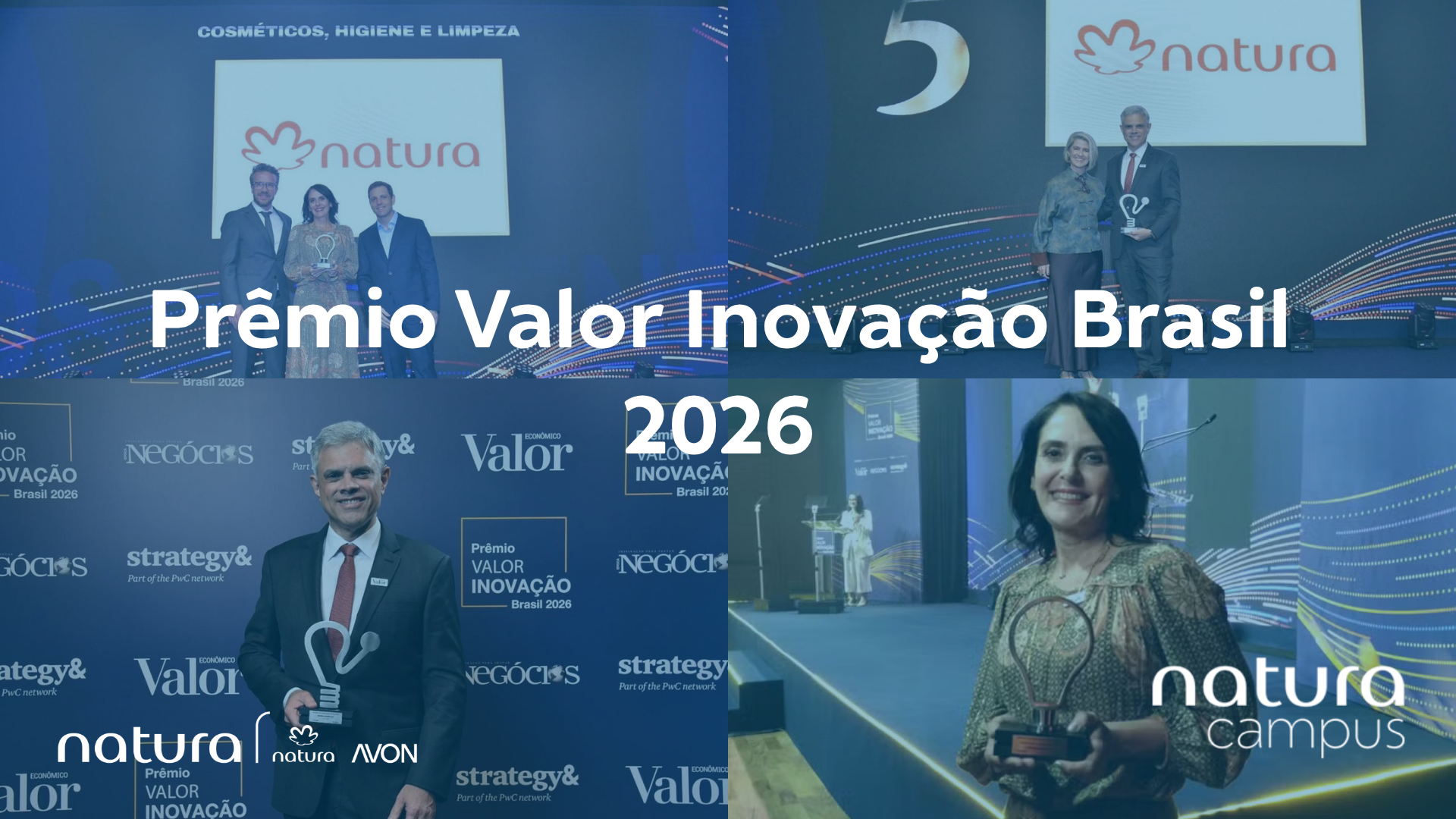
These research and analyses are the result of two scientific studies awarded by Natura and CAPES. These discoveries exist solely due to the curiosity and dedication of two Brazilian researchers. Both believe that nature is an inexhaustible source of learning and that a generous view of everything it can offer generates, in addition to innovation, a clear sense of duty and care. This perspective was a determining factor in Priscilla Melo and Felipe Hernandes Coutinho being chosen as winners of the second edition of the Capes Natura Campus Award, held in November 2018 at Natura's headquarters in Cajamar. With their unique and differentiated perspective, the winning research reiterates the need to make knowledge about natural resources a priority not only at Natura but in all Brazilian companies.
Priscilla Melo was the winner in the category of biodiversity. The researcher from the “Luiz de Queiroz” School of Agriculture (ESALQ) at USP in Piracicaba received financial support from Fapesp to conduct her study and write the article Antioxidative and prooxidative effects in good lipids and synergism with A-Tocopherol of açaí seed extracts and grape rachis extracts, published in the scientific journal Food Chemistry. The aim is to evaluate agro-industrial waste as sources of natural antioxidants, aiming to replace the synthetic antioxidants currently used by the industry. “Brazil, with its economy strongly based on agribusiness, produces a large amount of solid waste as a result of its agro-industrial activities,” points out Priscilla, who took her first steps in research in 2008. “Most of this material is useless and is discarded into the environment.
Therefore, there was a desire to seek alternatives for reusing these materials and, consequently, to contribute to reducing their disposal in the environment and to the sustainability of the agro-industrial chain.”
To carry out her work, the researcher collected samples in Rio Grande do Sul, São Paulo, Bahia, and Pernambuco. She studied waste from tomatoes, guavas, coffee, oranges, cupuaçu, cajá, grapes, and açaí. Through a screening, she discovered that the last two were the organic residues that showed the best results, possessing high levels of phenolic compounds, which have antioxidant and anti-inflammatory potential. The results were promising, as agro-industrial waste can represent up to 30% of the total processed grapes, while in açaí, the seed alone represents about 70% of the fruit's volume. Furthermore, the phenolic compounds were able to inhibit, in in vitro assays, reactive species that are harmful to the body.
“We have a great supply of raw material for the extraction of bioactive compounds, which can become natural additives to be used by the food, cosmetic, and pharmaceutical industries,” says Priscilla.
In the case of açaí, the use of the seed also adds value to the product, potentially benefiting communities that cultivate and market it, consequently generating greater appreciation of national biodiversity. Industrially, synthetic antioxidants such as BHA, BHT, and TBHQ are used in products with high levels of unsaturated fatty acids, which are more susceptible to oxidation. Synthetic additives are present in foods such as mayonnaise and margarine, for example. With the advancement of her research, Priscilla believes that replacing synthetic antioxidants with natural compounds in these products could become an alternative in the food industry. Another possibility is also the creation of functional foods, which can bring even more health benefits – all from the utilization of raw materials that are currently discarded.
In the category of conservation, the award went to Felipe Hernandes Coutinho, author of the article Marine viruses discovered via metagenomics shed light on viral strategies throughout the oceans. The researcher, who is currently conducting studies at the Universidad Miguel Hernández de Elche in Spain, started the project in 2013 at the Federal University of Rio de Janeiro (UFRJ), motivated by the limited knowledge about the biodiversity of viruses in the oceans. “Several questions guided the study: which organisms are infected by these marine viruses? What is the extent of their genetic diversity? And how is this diversity related to environmental factors?” questions Felipe. Analyzing water temperature and light availability, his study discovered thousands of fragments of marine virus genomes and their characteristics. “By observing the evolution of these viruses, we found that several of them are new species, never before characterized,” he says.
Felipe emphasizes that the discovery is important because the literature still knows little about marine viruses. By associating their existence with environmental parameters, it is possible to elucidate how the diversity of these beings is distributed in the environment. “Viruses play a central role in the functioning of marine ecosystems, mainly mediating nutrient cycling,” he explains. “But we know little about how this role can be influenced by light and temperature. Our work helps to understand which microorganisms are targets of these viruses, serving as sources of nutrients in the marine environment.”
Among the areas researched by Felipe are the coral reefs of Abrolhos, a Brazilian ecosystem threatened by human action.
The conclusion of the work in that region brought hope: the viruses present in the ocean of that environment are, in addition to a discovery, a detailed report that increases the interest of the Brazilian scientific community and stimulates multidisciplinary research focused on conservation like that of the researcher. His analysis, which encompassed virology, ecology, marine biology, and genetics, is proof of the connectivity capacity of nature.
For Priscilla, the recognition can and should also draw the attention of the industry, so that the creation of new products seeks natural alternatives more frequently. “In Brazil, in general, scientific research faces certain difficulties in approaching society and industry. Initiatives like the Capas Natura Campus Award are extremely important, as they represent a link that facilitates this communication,” she says.
Natura believes in science as a way to transform the world into a better place. In promoting well-being and care for the planet through technological solutions with the potential to reach the hands of every person. With this, it values Brazilian researchers, who are extraordinarily talented, and establishes partnerships with entities that promote scientific development such as CAPES. Pragmatically, the award allows Natura to map new trends and emerging technologies that can complement its research, development, and innovation efforts.
More broadly, the realization of the Award is a dream come true and, more than that, the certainty that it is a dream that is just the beginning of a positive journey for the entire network of relationships of Natura and for society.
In 2019, the III Edition of the CAPES – Natura Campus Award will be launched, and more science is on the way! Stay tuned!