(Originally published by Armando Pereira Filho/UOL)
Disclosure/Natura
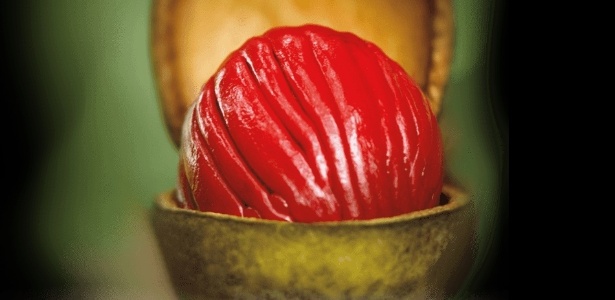
Ucuuba seed from the Amazon used by Natura to make moisturizers
The ucuubeira ("butter tree") is at risk of extinction in the Amazon because it is highly sought after for making broom handles, door frames, roof beams, and charcoal (the wood is burned).
A new line from the Brazilian cosmetics company Natura, launched last year, helps to give greater economic value to the tree and preserves it from being cut down.
The company uses the ucuuba, the fruit of the tree, whose seed is a source of a light butter with high moisturizing power. As a result, more efficient creams are produced: they can hydrate well without leaving the skin greasy, according to Natura.
Residents earn three times more
Residents in the forest region in the interior of Pará, next to rivers, cut down trees to sell to lumber companies. With Natura's project, they are encouraged to keep the trees alive, harvesting only the fruits.
The company states that residents earn three times more than they would by selling the wood. Furthermore, the tree remains standing and will yield again for about ten years.
Disclosure/Natura
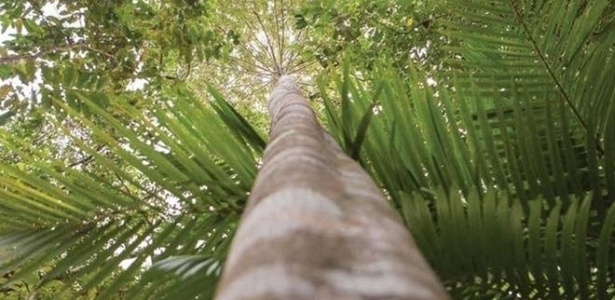
This is the ucuubeira, the ucuuba tree, which becomes moisturizers
Açaí and murumuru become perfume and shampoo
Natura's Ekos line has existed for 16 years and uses seeds and fruits from the Amazon, such as açaí, murumuru, andiroba, buriti, cumaru, and the ucuuba itself.
Armando Pereira Filho/UOL
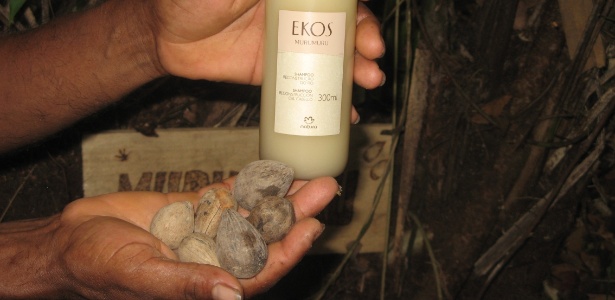
Murumuru seeds and shampoo made with the ingredient
Workers travel hours in small boats
These ingredients are harvested by riverside communities, who have to navigate for hours in small boats on the rivers of Pará and Amazonas to deliver their production.
Armando Pereira Filho/UOL
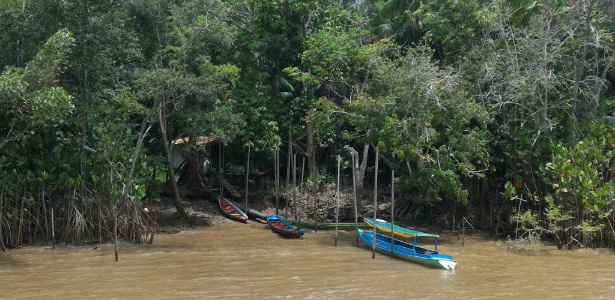
Residents of Pará use boats to carry their harvest of seeds and fruits
Açaí harvest yields up to R$ 3,000 per month
In the Amazon, Natura has 24 supplying communities, with about 2,000 families. According to the company, the monthly income of the riverside dwellers is between R$ 2,000 and R$ 3,000 during the açaí season, the most valued product. This lasts for four months of the year. After that, they have to harvest other crops.
Armando Pereira Filho/UOL
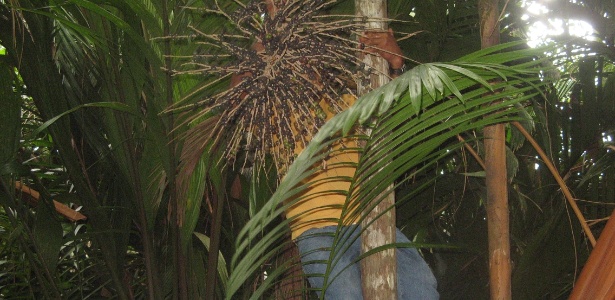
Man climbs a tree to harvest açaí in Abaetetuba (PA)
Cooperative industrializes seeds, and earnings increase 7 times
Selling only the seeds and fruits does not yield much money. That’s why Coofruta, a cooperative of workers from Abaetetuba (PA), created a small industry with the support of Natura to produce oils and butters that are raw materials for cosmetics right there.
According to Cláudio Brito, director of Coofruta, the income from industrialization can increase seven times. The price of a kilogram of murumuru seed (used for shampoos and conditioners) was around R$ 3.80 at the end of August. The price of a kilogram of murumuru butter was sold for R$ 27.50 (the values fluctuate according to the harvest).
Armando Pereira Filho/UOL
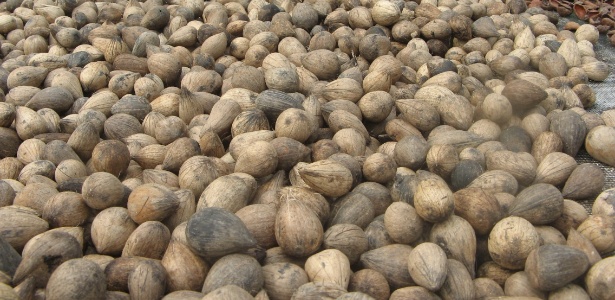
Murumuru seeds drying in a greenhouse; they are worth 7 times more after industrialization
Explore the forest without destroying it
Natura has a project to explore the forest without cutting down the trees.
"The Amazon Program was launched in 2011 with the goal of keeping the forest standing, giving value to the production of seeds, oils, and butters from Amazonian trees," says Renata Puchala, Sustainability Manager at Natura.
The project encourages scientific research to discover which seeds can become cosmetics and generate wealth.
The company's proposals are in its "Sustainability Vision 2050," which advocates that its brands help to raise ecological awareness, seeking innovative technologies with a positive impact on society. The full project is available on the website www.natura.com.br/e/sustentabilidade.
September 5 is Amazon Day
On September 5, Amazon Day is celebrated. The forest covers about 5.5 million and a half square kilometers and spans nine countries. Of its territory in Brazil, only 26% is protected (read more about the Amazon here).
Reproduction/grayline
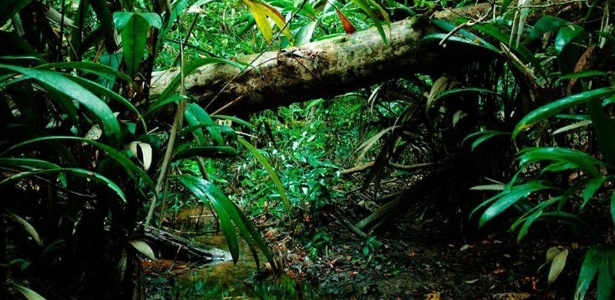
Deforestation is one of the problems faced in the Amazon rainforest
(The journalist traveled at the invitation of Natura)