Let’s imagine that, during a cooking contest, two finalists, João and Pedro, used their special recipes to win the competition. João made a frosting he learned from his grandmother, and the recipe has been in his family for years. Pedro made a filling he learned in a chef training course. The judges tasted the final creations, but neither of them won the course. It was unanimously decided that the perfect cake would be the combination of João's frosting with Pedro's filling. Currently, João and Pedro are partners, and the bakery's flagship product is the cake that combines both of their specialties. Among the other products sold, there is a series of successful creations that merge Pedro's family culinary history with João's technique.
Observing nature shows us that “uniting” is a path to success. In school, we studied the classic examples of asexual and sexual reproduction. When evaluating these two models, it becomes evident that the strategy of sexual reproduction allows for the incorporation of differences and the creation of the new, which generates advantages for survival. In contrast, asexual reproduction, which does not allow for exchange between individuals, creates more fragile and unfavorable scenarios for life.
In both Model A and Model B, there was an external event that altered the blue ball, creating two distinct balls: the green and the red. In Model A, the green and red balls cannot relate to each other and share their differences. In this case, since the environment is only favorable to the red ball, it and its descendants survive, while the information from the green ball will disappear over time. In Model B, the green and red balls can share their particularities and generate new ideas. In this case, they create new possibilities for existence that may or may not survive over time in the given environment.
The story of Pedro and João, although fictional, illustrates collaborative events that happen daily and, like sexual reproduction, maintains the dynamics of incorporating new ideas to ensure success. Matthew Ridley, an English scientist and journalist, continues to investigate to understand “how humans jointly use their brains to combine and recombine ideas to truly merge into something new and advantageous” (1). This is also one of the issues investigated in the field of Innovation, which today figures as the main mechanism to ensure the growth of companies. It is now known that opening the innovation process in companies and combining ideas, knowledge, skills, and technologies, developed both externally and internally, creates more value and competitive advantages (2,3).
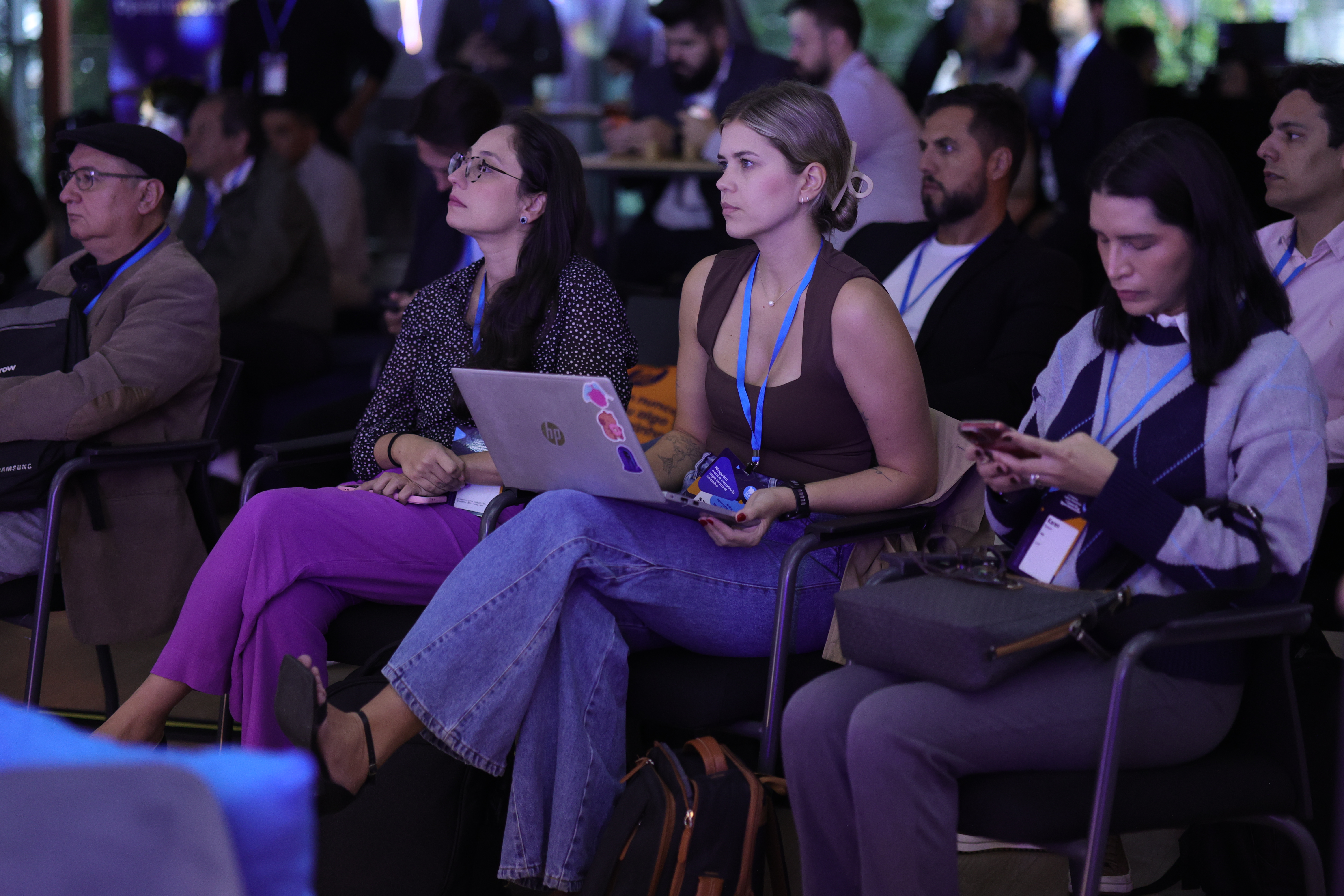
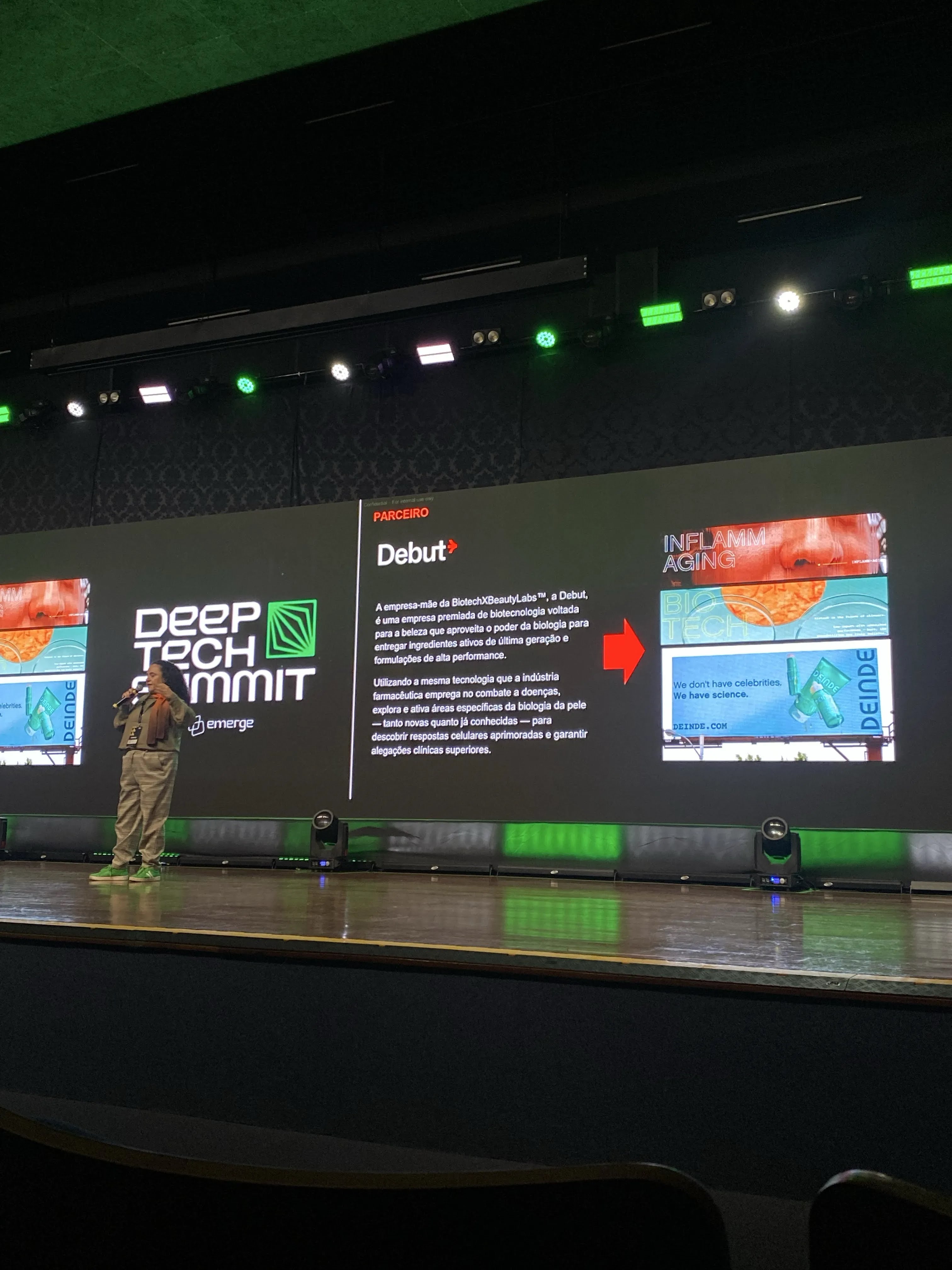
Observing what happens in nature, which guarantees the expansion of possibilities for generating value, inspires Natura's Innovation to invest in “new ways of doing.” One of these is to create environments for encounters to happen. Environments where the flow of ideas, knowledge, skills, and resources in general are stimulated and valued. With the aim of gathering more elements that support this belief, promoting a connection environment, and encouraging the search for mutual opportunities for collaboration on projects and building partnerships, in July of this year, the Natura Amazônia Innovation Center (NINA) held the “Natura Campus Connection 2013 – Amazon.”
NINA invited researchers from the region who submitted proposals with technical-scientific relevance to the “Natura Campus Project Call” (held in 2012) and business partners from its network for a meeting focused on collaboration opportunities in science and technology in the Amazon context. To complete this scenario, funding agencies capable of leveraging possible projects and emerging initiatives from this meeting were also invited.
Throughout one day, representatives from these institutions had the opportunity to get to know each other and, based on the materials previously provided by Natura, which included information about each of their competencies, held 27 targeted meetings, seeking opportunities for joint action.
The articulation of this network sparked conversations on topics such as Amazonian Biodiversity, Bioprospecting, Green Chemistry, Vegetable Oils, and Biotechnology, from which emerged:
- 02 new opportunities for creating agreements;
- 08 connections for deepening specific topics;
- The strengthening of 02 ongoing partnerships;
- 02 exchanges of initial drafts for possible project contracting.
As expected, this movement expanded the possibilities for network innovation and brought NINA closer to new opportunities for innovative ideas and projects. By promoting this field of network interaction, Natura created opportunities for value capture for the Amazon region.
This experience aligns with the principles also observed in nature for promoting innovation, such as sexual reproduction, and strengthens Capra's idea that it is necessary to nurture a “new paradigm that conceives a holistic worldview – a world as an integrated whole, which can also be understood as an ecological vision. Deep ecological perception recognizes the fundamental interdependence of all phenomena: it sees the universe not as a collection of isolated objects, but as a network of phenomena that are fundamentally interconnected and interdependent. Deep ecology recognizes the intrinsic value of all living beings and conceives humans merely as a particular thread in the web of life” (4).
And you? What do you think about collaboration as a way to innovate?
Bruno Oliveira holds a degree in Biological Sciences from USP-SP and a postgraduate degree in Business Management from Fundação Getúlio Vargas. He currently coordinates networks, partnerships, and funding at Natura, developing activities related to network activation, negotiation, contracting, fundraising, and funding management focused on the Natura Amazônia Innovation Center.
Contact: brunooliveira@natura.net
REFERENCES
- Matthew Ridley, TED Talks, viewed at: “When ideas have sex,” http://www.ted.com/talks/matt_ridley_when_ideas_have_sex.html
- Fredberg, Tobias, Elmquist, Maria and Olilla, Susane (2008). “Managing Open Innovation: Present findings and Future Directions”. Vinnova Report.
- Chesbrough, Henry. (2003). “The era of open innovation”. Mit Sloan Management Review, 33-41.
- Capra, The Web of Life: A New Scientific Understanding of Living Systems. Translated by Newton Roberval Eichemberg. São Paulo: Cultrix, 1996. 256 p. Original Title: The Web of Life: A New Scientific Understanding of Living Systems.