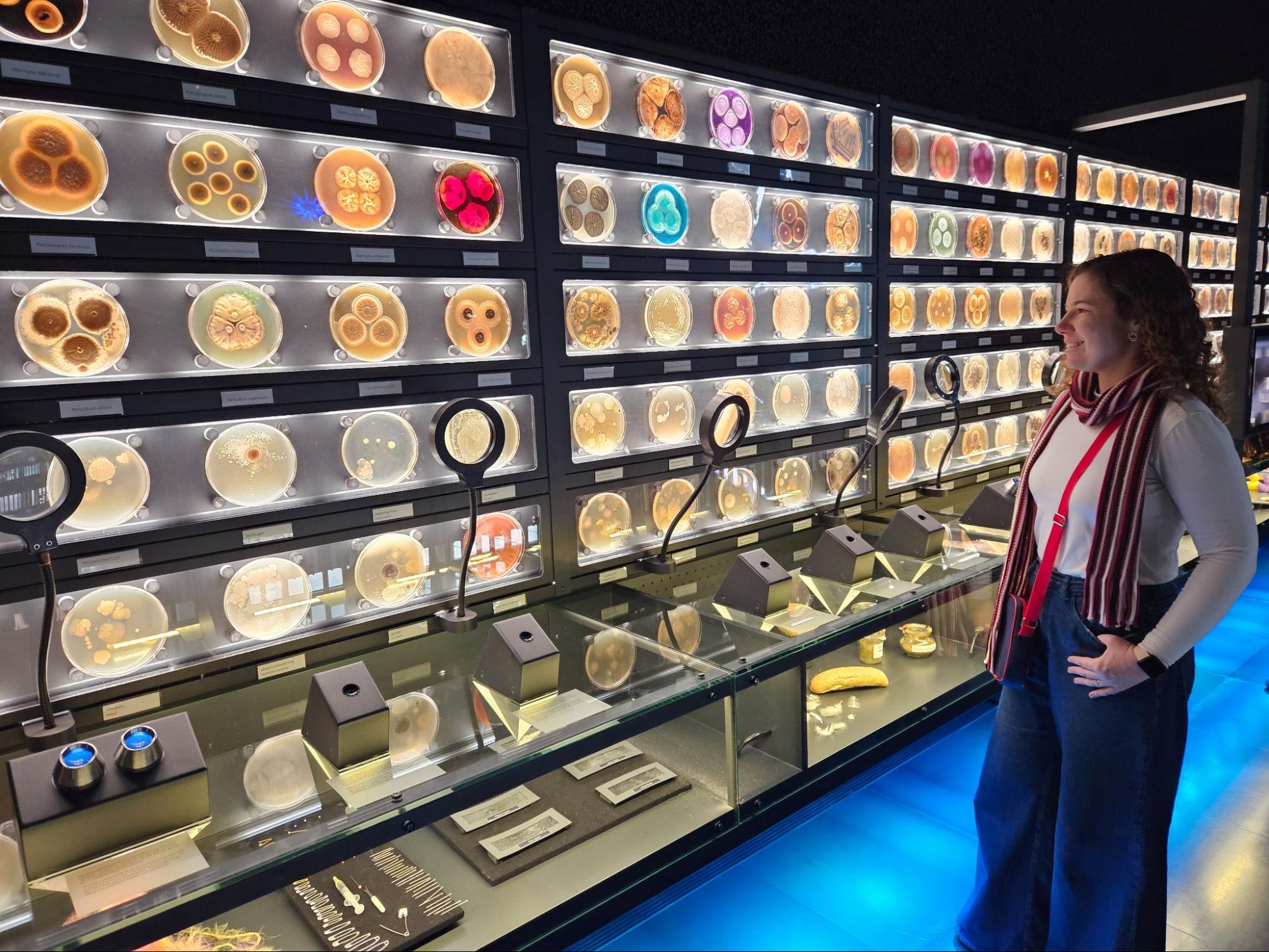
What if the secret to resilient skin and healthy hair lies not in a single ingredient, but in the balance of an entire ecosystem? Throughout our body, there exists an invisible universe to the naked eye, a vast jungle inhabited by millions of creatures: the microbiota. This ecosystem, composed of bacteria and other tiny beings, serves as a living, active, and essential defense barrier for our health.
"Today, we know that the microbiota is important because it can do things that our body cannot, such as digest certain substances, produce vitamin D, and regulate our immune response to environmental stimuli," says Luciana Vasquez, Advanced Research Manager in Skin and Hair at Natura. "Studies show that the microbiota even influences mental behaviors through mechanisms that regulate the production of neurotransmitters," she adds.
In the field of cosmetic science, attention turns to the most exposed part of this ecosystem – the skin, which extends across the body, including the scalp. In a state of balance, or homeostasis, the microbiota acts as a dynamic protector, preventing potentially harmful external agents from causing damage. To illustrate, Luciana Vasquez highlights the value of diversity: "We can draw an analogy between the microbiota and the ecosystem of a forest. If we have a forest with few species, it will be fragile. But, on the other hand, if we have a diverse forest, the system tends to be more stable and resilient." On the scalp, this same harmony provides the ideal environment for the growth of strong and healthy hair.
However, when this delicate balance is disrupted — a state known as dysbiosis — many of the most common dermatological complaints arise. Studies have already shown that in areas affected by issues such as acne and dermatitis, the composition of the microbiota differs from healthy regions. In the scalp, dysbiosis is a key factor for conditions like dandruff and oiliness, often associated with the proliferation of fungi such as Malassezia.
Understanding the mechanisms of this ecosystem is of utmost importance to Natura, as it helps us develop smarter products capable of interacting with the microbiota in a way that assists the body in regaining balance. Our scientific journey, which has lasted over a decade, has continuously evolved.
We started with the prospecting of prebiotics – ingredients that serve as a substrate for beneficial microorganisms. This research resulted in knowledge that is now incorporated into lines such as Tododia and Chronos. Subsequently, research advanced to the field of probiotics, developing patented technologies based on specific bacterial strains to reinforce the skin barrier and act on mechanisms related to aging, which materialized in products like the Chronos Super Wrinkle Reducing Serum.
The next phase was specialization, utilizing advanced analysis technologies, such as next-generation sequencing (NGS), focusing on complex ecosystems, such as that of the scalp and the particularities of different skin types. This scientific deepening into the hair ecosystem allowed for the development of high-performance solutions, such as the Lumina Anti-Dandruff line. Continuing this journey, the application of this science to specific skin types resulted in our most recent launches, such as the Tododia Black Skin line, launched in 2024.
This care philosophy, which views the skin as a living ecosystem, permeates our entire portfolio. It materializes in the gentleness of the children's line Natura Naturé, face care in Natura Chronos, technology to reinforce the skin barrier of the body in Tododia and in the hair lines Lumina and Tododia. For Natura, decoding the complex language of the microbiota is not just a scientific advancement; it is the path to smarter and more effective care. We believe that the future of beauty does not lie in fighting against biology, but in understanding it.